
The cost of cremation typically falls between about $1,000 and $7,000 or more, depending on whether you choose a simple direct cremation, a cremation followed by a memorial, or a full-service cremation with a viewing. Where you live and which provider you use also change the total. This guide walks through each tier, every common line item, and practical ways to keep the bill manageable.
Quick answer: Direct cremation commonly runs about $1,000 to $3,000. Cremation with a memorial service often totals roughly $2,500 to $5,500. Full-service cremation with a viewing is higher: the NFDA 2023 General Price List Study put the median for a funeral with viewing and cremation at about $6,300, before cemetery costs. Prices vary by provider and area, so compare written price lists.
What drives the cost of cremation
Cremation is often described as the more affordable choice, and for many families it is. But the final number depends on a handful of decisions, and most of them are yours to make. Knowing which factors matter most helps you spend on what is meaningful and skip what is not.
The biggest drivers are:
- The type of arrangement. Direct cremation, a memorial service, or a full service with a viewing are very different in scope and price.
- The provider. Funeral homes, cremation societies, and direct cremation companies set their own prices, and the same service can differ by hundreds or even thousands of dollars.
- Your location. Costs are generally higher in large metro areas and lower in smaller towns, though there are exceptions. For one state’s picture, see this look at the average funeral cost in Texas.
- Who owns the crematory. Some providers have their own crematory on site. Others pay a third party, and that cost is passed along.
- Add-ons. Urns, extra death certificates, flowers, obituary notices, and scattering services can add up quickly.
For a broader view of how every kind of funeral is priced, our guide to how much a funeral costs, with every line item explained, is a helpful companion to this one.

The three tiers of cremation and what each includes
Most cremation arrangements fall into one of three tiers. The ranges below are approximate and vary by provider and area. Always ask for an itemized quote.
Tier 1: Direct cremation
Direct cremation is the simplest option. The provider collects the body, handles the required paperwork and permits, performs the cremation, and returns the ashes in a basic container. There is no viewing, no embalming, and no ceremony with the body present.
This tier commonly runs about $1,000 to $3,000. Many families choose it because it keeps costs low and leaves them no-cost to hold a gathering later, at a time and place that suits them. Our guide to direct cremation costs goes deeper on what is and is not included.
Tier 2: Cremation with a memorial service
With this option, the cremation happens first, and a memorial or celebration of life follows, often with the urn present and without the body. The service can be held at a funeral home, a place of worship, a park, or a family home.
Expect a total of roughly $2,500 to $5,500, depending on the venue, staff time, music, refreshments, and printed materials. This tier gives families a place to gather without the expense of embalming, a casket for viewing, or hearse transport to a graveside.
Tier 3: Full-service cremation
Full service looks much like a traditional funeral, followed by cremation instead of burial. It may include embalming, a viewing or visitation, a funeral ceremony with the body present, a rented ceremonial casket, and a hearse.
The NFDA 2023 General Price List Study reported a median of about $6,300 for a funeral with viewing and cremation, before cemetery costs. Totals commonly range from about $5,000 to $7,500 or more, depending on choices and location.
You choose the tier first; the price follows. Decide what kind of goodbye feels right, then compare quotes.
Itemized table of typical cremation costs
Here is a line-by-line view of common charges. These are approximate typical ranges, not quotes, and they vary by provider and area.
| Item | Typical range | Required or optional |
|---|---|---|
| Basic services fee of the funeral director and staff | $500 to $2,500 | Required (the only fee providers may not let you decline) |
| Transfer of the body to the provider | $250 to $600 | Required |
| Cremation fee (crematory charge) | $300 to $800 | Required |
| Basic cremation container (cardboard or simple wood) | $50 to $400 | Required (a container is needed; a casket is not) |
| Embalming | $500 to $1,000 | Optional (generally only needed for a viewing) |
| Viewing or visitation | $300 to $1,000 | Optional |
| Funeral or memorial ceremony staff and facility use | $300 to $1,500 | Optional |
| Rental ceremonial casket | $800 to $1,500 | Optional |
| Hearse or transport to the ceremony | $200 to $500 | Optional |
| Urn | $30 to $1,000 or more | Optional (a temporary container is usually provided) |
| Certified death certificates (each) | $5 to $30 | Required (you will need several) |
| Scattering or ash interment | $100 to $1,000+ | Optional |
| Obituary notice | $100 to $600+ | Optional |
| Flowers and printed programs | $100 to $500+ | Optional |
The basic services fee is usually the largest single charge in a direct cremation, and it is the one fee the FTC Funeral Rule says providers may not let you decline. Most other lines are decisions you can make for yourself.
What is required versus what is optional
Many families feel pressure to buy everything on the menu. In reality, only a small set of items is truly necessary.
What is required
- The basic services fee of the funeral director and staff.
- Transfer of the body from the place of death.
- The cremation itself, including crematory charges and any required permits.
- A basic cremation container, which can be simple cardboard or unfinished wood.
- A container for the ashes, which the provider usually supplies in a simple temporary form.
- Certified copies of the death certificate, which banks, insurers, and other institutions typically require.
What is optional
- Embalming, which is generally not required for direct cremation. Rules and practices can vary, so ask the provider and check with your state funeral board.
- A casket. Cremation does not require one. If you want a viewing, a rental casket is usually available.
- A viewing, visitation, or formal ceremony.
- A purchased urn, flowers, an obituary notice, and keepsake jewelry.
- Scattering services or burial of the ashes in a cemetery niche or plot.
Some of these items interact. For example, a funeral home may require embalming or a casket only if you choose a public viewing. If you are told something is required, it is reasonable to ask which law or policy requires it.
Add-ons: urns, death certificates, and scattering
These extras often surprise families because they are separate from the main package price.
Urns
An urn can be as simple as a $30 to $100 container or as elaborate as a $1,000 or more piece of hand-finished wood, metal, or stone. You are not required to buy one from the funeral home. Under the FTC Funeral Rule, you may bring or buy your own. For price ranges by material, see our guide to urn prices.
Death certificates
Each certified copy costs a modest amount, but most families need several. Banks, insurance companies, retirement accounts, and property offices each usually want an original certified copy. Ordering extras at the start is typically less expensive and less stressful than ordering them later. The number you need depends on your situation.
Scattering and interment of ashes
Scattering ashes yourself on private land with permission is generally low in cost. Hiring a service for a sea scattering, an air scattering, or a placement in a cemetery niche can run from about $100 to $1,000 or more. Rules differ by location and by property, so check with your local and state agencies and the property owner before you scatter. For families weighing ashes against a grave, our comparison of cremation vs burial cost lays out the full picture, and a look at the cost of burial covers plots, vaults, and caskets.
Money-saving tip: Buy or bring your own urn, and ask the funeral home in writing whether it will accept it at no extra charge. The FTC Funeral Rule says providers may not charge a handling fee for a casket or urn you purchased elsewhere.
How to compare funeral homes using the General Price List
The FTC Funeral Rule requires every funeral provider to give you a General Price List (often shortened to GPL) when you ask about goods or services. This is an itemized written list of everything the provider sells, with a price for each. It is your most powerful tool for comparing providers fairly.
Providers must also give you the price list in person, and many post theirs online. You have the right to choose only the items you want and to receive a written statement of what you are buying before you pay. For the exact wording of the rule, confirm with the Federal Trade Commission.
A few more terms to know:
- Basic services fee: the non-declinable charge that covers the provider’s overhead, planning, and paperwork.
- Cash advance items: charges the funeral home pays to a third party on your behalf, such as flowers, obituary notices, or certified death certificates. Ask whether the home adds a markup.
- Outer burial container: a vault or liner used in burial. It is not needed for cremation, but it appears on many price lists.
Here is a simple way to compare:
- Call or visit at least three providers, including one direct cremation company if you want the simplest option.
- Ask each for its General Price List. If a provider will not share it, that is useful information.
- Write down the total for the same arrangement at each place, such as direct cremation with a basic container.
- Ask what is included in the basic services fee and what is charged separately.
- Ask whether the provider has its own crematory or uses a third party.
- Check for cash advance markups and handling fees.
- Take your time. You do not have to decide on the spot.
If you want help finding lower-priced providers, our guide on how to find affordable cremation explains what to look for and how to avoid hidden fees.
Ways to lower the total
Cremation already offers several natural savings. These steps can reduce the total further without lessening the respect shown to your loved one.
- Choose direct cremation and hold a gathering later. This avoids embalming, viewing fees, and a rushed schedule. See our guide to how much cremation costs without services for details.
- Hold the memorial somewhere low-cost. A home, park, place of worship, or community room often costs far less than a funeral home chapel.
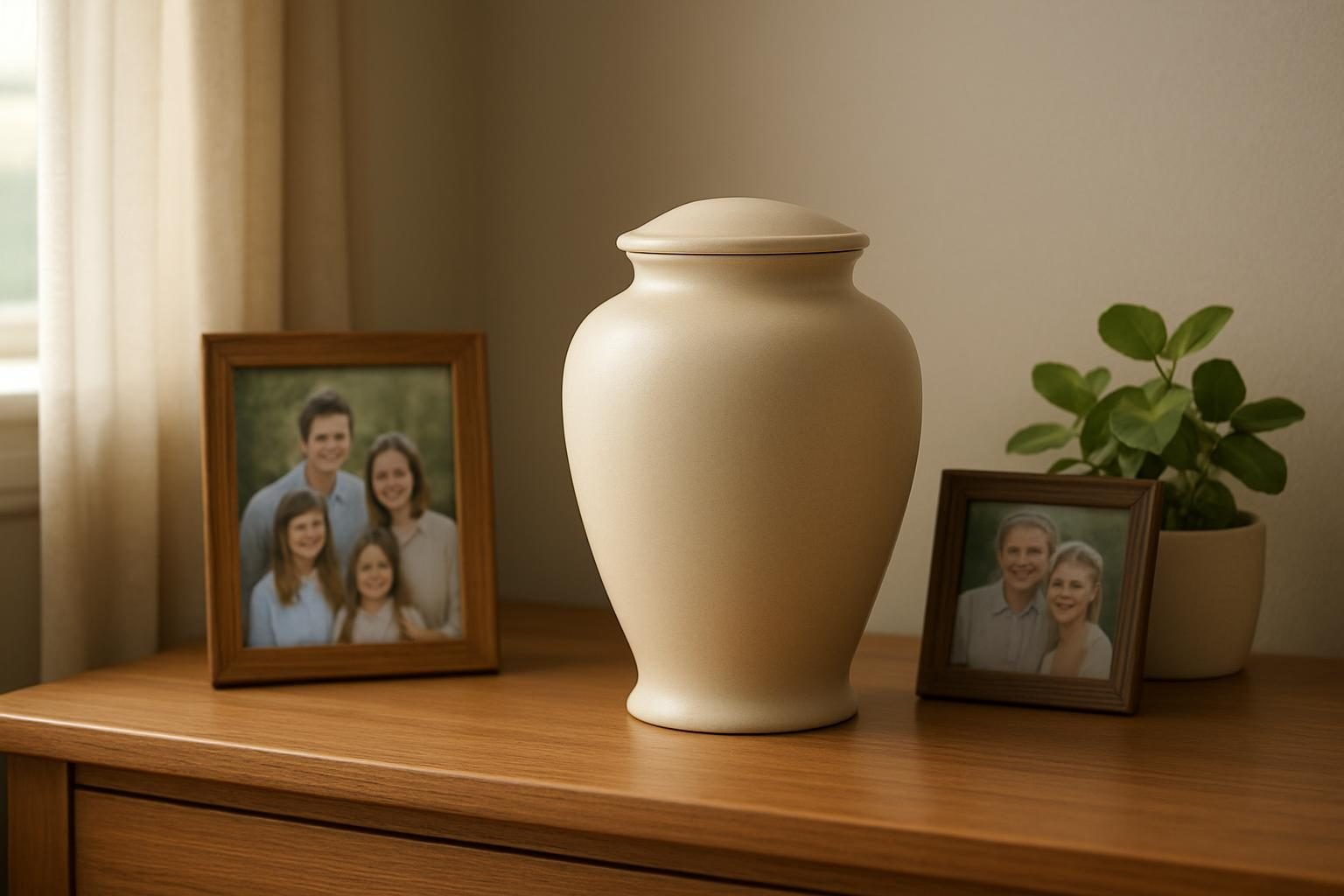
- Bring your own urn. A wooden box, a keepsake, or an online purchase may cost a fraction of the funeral home price.
- Skip embalming unless you want a viewing. It is typically not needed for direct cremation.
- Order only the death certificates you need. Make a list of institutions first, then count.
- Handle some tasks yourself. Writing the obituary, designing the program, and arranging flowers can be done by family.
- Get everything in writing. A written statement of goods and services selected helps prevent surprises.
How families pay for cremation
Many families wonder how to cover the cost, especially if it arrives suddenly. There are several common routes, and each has trade-offs. This is general education, not financial advice.
Savings and everyday funds
Some families pay out of savings or a checking account. This is simple but can be hard if the expense is unexpected. The provider will usually expect payment at or soon after the time of arrangements.
Payable-on-death accounts
A payable-on-death (POD) account is a bank account with a named beneficiary who can claim the money directly after the owner passes, often without waiting for a lengthy court process. Some people set aside funds in one for final expenses. Ask your bank how POD accounts work, since terms and rules differ.
Prepaid funeral plans
A prepaid plan lets you choose and pay for services in advance, often locking in today’s prices. Rules about how the money is held and whether it is refundable vary by state. Ask the provider how funds are protected, and check with your state funeral board or state banking regulator or insurance department, depending on how the plan is structured.
Final expense insurance
Final expense insurance is a small whole-life policy designed to cover end-of-life costs, with a modest payout to a named beneficiary. Premiums, health questions, and waiting periods differ by policy. Our guide to final expense insurance explains how it works and what it costs. To go over options for your situation, a licensed agent is available by phone. Your state insurance department can also answer questions about licensing and consumer protections.
Whichever route you choose, share the plan with a trusted family member. The best arrangement is one your family knows about before it is needed.
A plan only helps if someone knows it exists. Tell one trusted person where your wishes and papers are kept.
Planning ahead for a conversation with family
If you are helping a parent, or planning for yourself, the hardest part is often starting the conversation. A gentle approach is to frame it as taking a burden off the people you love. Many families find it easier over a cup of coffee than in a formal sit-down.
You might begin by asking what kind of goodbye feels right: quiet and private, or a larger gathering. Then talk about whether burial or cremation feels more fitting. Once you know those preferences, the numbers become much easier to estimate and compare. You can also browse more guides in our cremation costs category.
Every guide on Cremation Costs
New guides are added here as they are published.
Explore the other topic guides
Key takeaways
- Direct cremation commonly costs about $1,000 to $3,000. A memorial service and full service raise the total.
- The NFDA 2023 General Price List Study median for a funeral with viewing and cremation is about $6,300, before cemetery costs.
- Only a few items are required: basic services, transport, cremation, a basic container, and death certificates.
- Ask every provider for its General Price List and compare the same arrangement side by side.
- You may bring your own urn, and you can hold a memorial later to spread out the cost.
- Savings, POD accounts, prepaid plans, and final expense insurance each work differently, so compare terms before deciding.
Frequently asked questions
What is the cheapest way to arrange a cremation?
Direct cremation is usually the lowest-cost option. It covers transport, basic paperwork, the cremation itself, and a simple container, with no viewing or ceremony. It commonly runs about $1,000 to $3,000, though prices vary by provider and area.
Is cremation always cheaper than burial?
Usually, but not always. Cremation skips the casket, burial plot, and vault, so the total is typically lower. A cremation with a full viewing, a large service, and a premium urn can approach the price of a simple burial, so the services you choose matter most.
Do I have to buy an urn from the funeral home?
No. Under the FTC Funeral Rule, you may supply your own urn or container, and the provider cannot refuse or charge you a fee for that. Many families buy from online retailers or use a keepsake they already own. Confirm the details with the FTC.
Can I scatter ashes anywhere I like?
Rules differ by location. Many public lands, parks, waterways, and private properties have their own requirements, and some need permission. Check with the property owner or your local and state agencies before scattering, and ask the funeral home what is commonly allowed in your area.
How can I pay for cremation without a large bill at once?
Families use savings, payable-on-death bank accounts, prepaid funeral plans, or final expense insurance that pays out to a named beneficiary. Each works differently, so compare terms carefully and consider asking a licensed agent or your state regulator how each option is protected.