
A funeral in the United States typically costs several thousand dollars, and the final number depends heavily on the choices a family makes. Understanding each line item ahead of time is the best way to stay in control of the total. This guide walks through every charge, what is required, what is optional, and how to compare providers.
Quick answer: The NFDA 2023 General Price List Study found median costs of about $8,300 for a funeral with viewing and burial and about $6,300 for a funeral with viewing and cremation, both before cemetery costs. Direct cremation commonly runs about $1,000 to $3,000. Your total will vary by provider, location and the choices you make.
What drives the cost of a funeral
No two funerals cost the same, because families make very different choices. A handful of decisions account for most of the difference between a modest bill and a large one.
- Burial or cremation. Burial adds a casket, a cemetery plot, a vault and grave opening fees. Cremation can avoid most of these.
- Type of service. A viewing, a ceremony at the funeral home and a hearse procession each add charges. A simple memorial gathering usually costs less.
- Where you live. Prices differ between big cities, small towns and different regions. Two homes in the same county can also differ a lot.
- Which provider you choose. Funeral homes set their own prices. Comparing a few can save real money.
- Merchandise. Caskets, urns and headstones range from basic to very expensive.
If you want a deeper look at typical totals, our guide to the average funeral cost for burial and cremation breaks down the ranges side by side.
Funeral costs line by line: a typical price table
The table below shows approximate typical ranges for each common charge. These are general estimates, not quotes. Prices vary by provider and area, so use this as a starting point and ask each funeral home for its own numbers.
| Line item | Approximate typical range | What it covers |
|---|---|---|
| Basic services fee | $2,000 to $3,500 | Planning, permits, paperwork, coordination and overhead. Charged by nearly every funeral home. |
| Transport of the body to the funeral home | $250 to $600 | Moving the deceased from the place of death to the funeral home. |
| Embalming | $500 to $1,000 | Preserving the body, usually for a public viewing. |
| Other preparation of the body | $200 to $500 | Dressing, cosmetology and casketing. |
| Viewing or visitation | $300 to $1,000 | Staff and use of the facility for a visitation. |
| Funeral or memorial ceremony | $400 to $1,500 | Staff and use of the funeral home or chapel for a service. |
| Hearse (funeral coach) | $300 to $500 | Transport from the funeral home to the service or cemetery. |
| Casket | $1,000 to $5,000 or more | Basic metal and wood caskets sit at the lower end; premium models cost much more. |
| Outer burial container or vault | $900 to $2,500 | Required by many cemeteries to keep the ground level. |
| Cemetery plot | $1,000 to $4,000 or more | The grave space. Varies widely by cemetery and region. |
| Opening and closing of the grave | $600 to $2,000 | Digging and filling the grave, charged by the cemetery. |
| Headstone or grave marker | $1,000 to $3,000 or more | Flat markers cost less than upright monuments. |
| Direct cremation (all-in package) | $1,000 to $3,000 | Cremation without a viewing or ceremony, plus basic services. |
These ranges explain why the national medians in the quick answer leave out cemetery costs. Plot, opening and closing, and headstone often come from the cemetery, not the funeral home, and can add several thousand dollars on top of the funeral home bill.
Understanding the main charges
The basic services fee
This is the one fee that almost every funeral home charges and that you generally cannot decline. It covers the home’s planning, paperwork, permits and overhead. Under the FTC Funeral Rule, it is the only fee a funeral home may list as non-declinable, so it is worth comparing carefully between providers.
Embalming, viewing and the ceremony
Embalming is the process of preserving the body for a limited time. It is often presented as routine, but in most situations it is not required. A funeral home may require it for a public viewing, so if you skip the viewing you can often skip embalming too. A viewing, a ceremony and a hearse are separate charges, which means you can choose some and not others.
Casket, vault and plot
The casket is usually the largest single item for a burial. An outer burial container, also called a vault or grave liner, is a concrete or metal enclosure placed around the casket in the ground. The cemetery, not the law, often requires one so the ground does not sink. The plot is the grave space itself, and its price depends heavily on the cemetery and location.
For a full breakdown of these items, see our guide to the cost of burial: plot, vault, casket and fees.
Cash advance items
Cash advance items are charges the funeral home pays to a third party on your behalf, such as flowers, obituary notices, clergy honorariums, a death certificate fee or musicians. The funeral home passes these costs on to you. Some add a markup, and the FTC Funeral Rule requires the home to tell you in writing if it does. Ask for these costs to be itemized.
You decide what to include. Each service and product on a funeral home’s list can be accepted or declined separately.
Cremation costs compared with burial
Cremation is often less expensive than burial, mainly because it can avoid the casket purchase, the plot, the vault and the grave opening fees. The NFDA 2023 General Price List Study put the median for a funeral with viewing and cremation at about $6,300, compared with about $8,300 for a funeral with viewing and burial. Both figures exclude cemetery costs.
Direct cremation is the simplest form. The body is cremated shortly after death, without embalming, a viewing or a ceremony with the body present. It commonly runs about $1,000 to $3,000. Families can then hold a memorial gathering at a time and place of their choosing.
Cremation still has choices that affect the total, including the container, an urn, whether you hold a service, and whether the ashes are kept, scattered or placed in a niche. Our guide to the cost of cremation: direct, with memorial and full service covers each version. If you are planning a gathering without a full funeral, read about memorial service cost with and without a funeral home.
What is required and what is optional
Many families assume every item on a price list is mandatory. Most are not. Knowing the difference helps you avoid paying for things you do not want.
Generally required
- The funeral home’s basic services fee, if you use a funeral home.
- A death certificate and the permits needed for burial or cremation, which are arranged through the proper channels.
- A container for cremation, usually a simple cardboard or fiberboard alternative container.
- Whatever the cemetery requires for burial, such as an outer burial container. This is a cemetery rule, so ask the cemetery for its policy in writing.
Generally optional
- Embalming, unless a provider requires it for a particular type of viewing.
- A viewing, visitation or public ceremony.
- A hearse and a procession.
- A casket from the funeral home. You may buy one elsewhere.
- A premium casket, an urn from the funeral home, flowers and printed items.
- Sealed or protective caskets. These do not preserve a body indefinitely, whatever the sales pitch suggests.
Laws differ from state to state, so confirm any specific requirement with your state funeral board or the Federal Trade Commission.

How to compare funeral homes using the General Price List
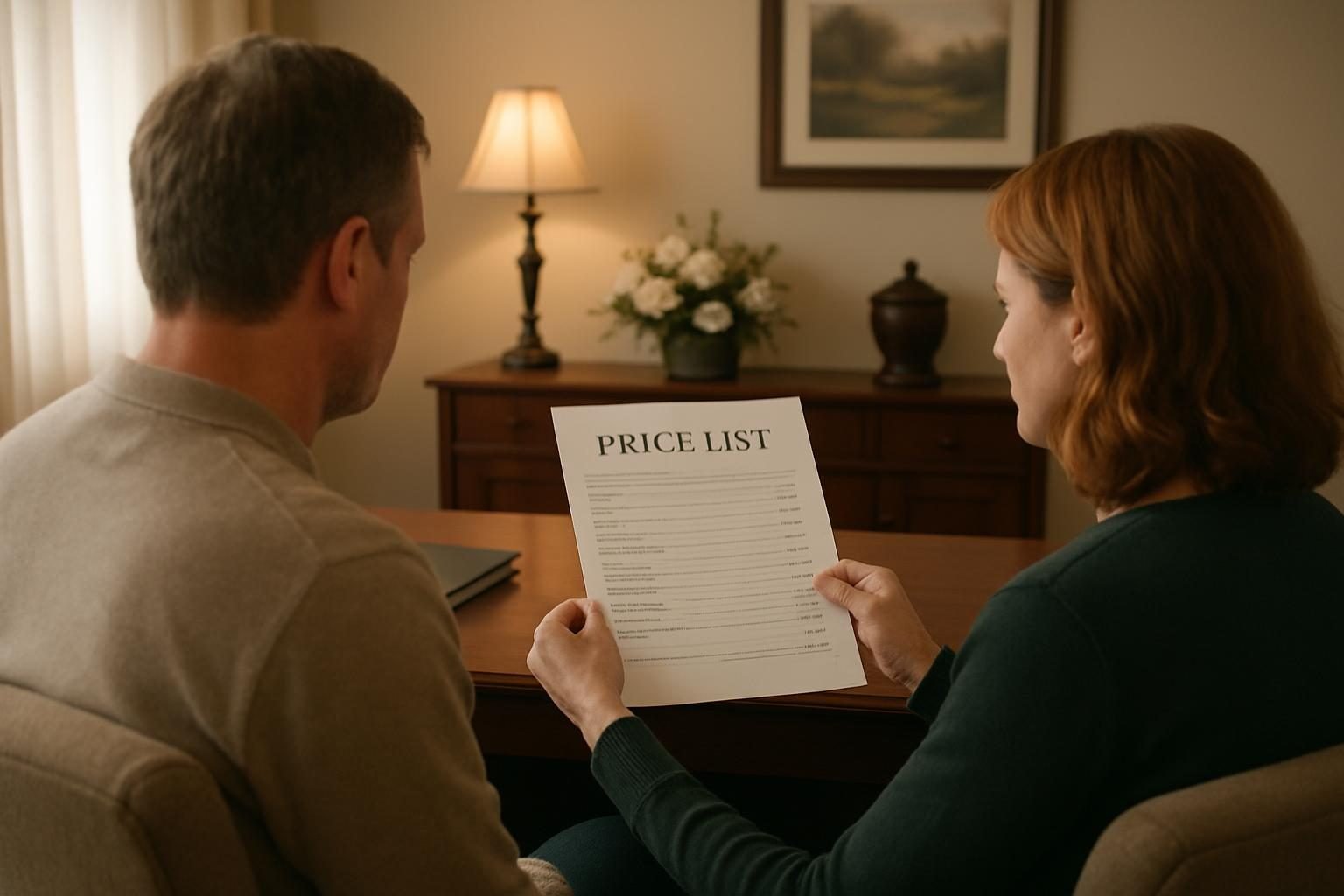
The General Price List, often called the GPL, is the itemized list of every product and service a funeral home sells. The FTC Funeral Rule, a federal regulation enforced by the Federal Trade Commission, requires funeral homes to give you this list to keep when you begin discussing arrangements in person. They must also give you accurate price information over the phone if you ask for it.
The rule also gives you some other protections. A funeral home must give you a casket price list before showing you caskets, accept a casket you bought elsewhere without a fee, and cannot claim embalming is required when it is not. You can read more on the FTC website, and our guide to reading a funeral home price list under the FTC Funeral Rule goes line by line.
A simple way to compare providers
- Call at least three funeral homes. Ask for their General Price List, or ask them to read prices over the phone.
- Compare the basic services fee first. It is the one fee every provider charges, so differences here carry through every funeral.
- Price the same package at each home. For example, compare direct cremation or a graveside service on the same terms.
- Ask about cash advance items. Find out whether any markup applies and request itemized costs.
- Check the casket and urn lists. Compare prices, and remember you may purchase these elsewhere.
- Ask for the total in writing. A statement of goods and services selected should list every charge before you agree.
- Take your time. You do not have to decide on the first visit, and a good funeral home will not pressure you.
Money-saving tip: Call three funeral homes before you visit any of them and ask each the same question: what is your total for a graveside service, or for direct cremation, with everything included? Comparing identical packages shows you the real price differences quickly.
Ways to lower the total without cutting corners
Keeping costs down does not mean giving up a dignified goodbye. A few practical choices can lower the bill by thousands of dollars.
- Choose direct cremation or a graveside service. Skipping the viewing, embalming and a full ceremony removes several charges.
- Buy the casket or urn elsewhere. Funeral homes must accept them. Online retailers and independent sellers often charge less.
- Hold the gathering somewhere else. A home, park, place of worship or community hall can replace a chapel rental.
- Limit extras. Printed programs, large floral arrangements and limousines add up fast.
- Look at cemetery options. Compare cemeteries, as plot and opening fees differ widely. Some offer lower-cost options such as columbarium niches or cremation gardens.
- Plan ahead. Decisions made calmly, with time to compare, usually cost less than decisions made in a hurry.
Our guide to the lowest-cost ways to handle a funeral goes into more detail on each option.
How families pay for a funeral
Funeral costs are usually due within days, so it helps to know your options before you need them. Families commonly use one or more of the following.
Savings and the estate
Many families pay from savings or from the estate of the person who died. Be aware that estate funds may not be available right away, as bank accounts can be frozen until the legal process allows access. A relative may need to cover the costs up front and be repaid later.
Payable-on-death accounts
A payable-on-death account, often called a POD account, lets the account owner name a person who receives the money directly, without going through the estate process. Some people set one up specifically for final expenses. Ask your bank how it works, and contact your state banking regulator if you have questions about account rules.
Prepaid funeral plans
A prepaid plan, sometimes called pre-need, lets you choose and pay for services in advance, either as a lump sum or in installments. Rules for how prepaid funds are protected differ by state. Ask who holds the money, what happens if you move or the provider closes, and whether the plan is refundable or transferable. Your state funeral board can explain the rules that apply.
Final expense insurance
Final expense insurance is a small whole life policy designed to pay a modest death payout to your chosen beneficiary, who can use it for funeral bills or other costs. Policies are typically available without a long application, and the premium depends on your age, health and the amount of coverage. Compare terms carefully, including any waiting period before the full payout applies. For a full explanation, see how final expense insurance works and what it costs. Your state insurance department can answer questions about licensed agents and policy rules.
For a side-by-side look at every option, read our guide on how families pay for a funeral. If you have questions about coverage, a licensed agent is available by phone to talk through your options with no pressure.
Writing down your wishes and where your documents are kept spares your family many hard decisions.
Funeral costs by state and city
Prices shift from place to place, and a national figure can only tell you so much. Our state guides give more local detail, starting with Texas. See our guide to the average funeral cost in Texas, city by city and the Texas funeral cost hub for local ranges. More state hubs will be linked here as they launch.
You can also browse every guide in the funeral costs category.
Planning ahead: a short checklist
Planning ahead takes pressure off your family and lets you compare prices without a deadline. Even a few decisions made now help.
- Decide between burial and cremation, and note any service wishes.
- Gather several General Price Lists and compare them.
- Choose how the costs will be paid, and tell a trusted person where the paperwork is.
- Keep copies of any prepaid contract or insurance policy somewhere your family can find them.
Our funeral cost checklist of every expense to plan for can help you organize all of this in one place.
Every guide on Funeral Costs
New guides are added here as they are published.
Explore the other topic guides
Key takeaways
- The NFDA 2023 median is about $8,300 for a funeral with viewing and burial and about $6,300 with viewing and cremation, before cemetery costs.
- Direct cremation commonly runs about $1,000 to $3,000 and is usually the lowest-cost route.
- The basic services fee is the one charge nearly every funeral home applies. Most other items are optional.
- The FTC Funeral Rule gives you the right to a General Price List and to buy a casket elsewhere.
- Call at least three funeral homes and compare identical packages in writing.
- Planning and deciding how to pay ahead of time spares your family stress and often lowers the total.
Frequently asked questions
How much does a funeral cost on average?
The NFDA 2023 General Price List Study found median costs of about $8,300 for a funeral with viewing and burial and about $6,300 for a funeral with viewing and cremation. Both figures are before cemetery costs. Direct cremation commonly runs about $1,000 to $3,000. Prices vary by provider and area.
What is the cheapest type of funeral?
Direct cremation is usually the lowest-cost option because it skips embalming, a viewing, a hearse for a service and a casket purchase. It commonly runs about $1,000 to $3,000. Families can add a memorial gathering later, at home or in a place of worship, for much less than a full funeral.
Can a funeral home require me to buy a casket from them?
No. Under the FTC Funeral Rule, a funeral home must accept a casket you bought elsewhere and cannot charge you a fee for doing so. Confirm the details with the Federal Trade Commission or your state funeral board if a provider tells you otherwise.
Is embalming required?
In most situations embalming is not required by federal rules. Some funeral homes require it for a public viewing, and some states have their own rules in certain circumstances. Ask the funeral home to show you in writing where it is required, and confirm with your state funeral board.
What is a General Price List and how do I get one?
A General Price List is the itemized list of goods and services a funeral home offers. The FTC Funeral Rule requires funeral homes to give you a copy to keep when you start discussing arrangements in person, and to give prices over the phone if you ask. You can call several homes and compare their lists.